

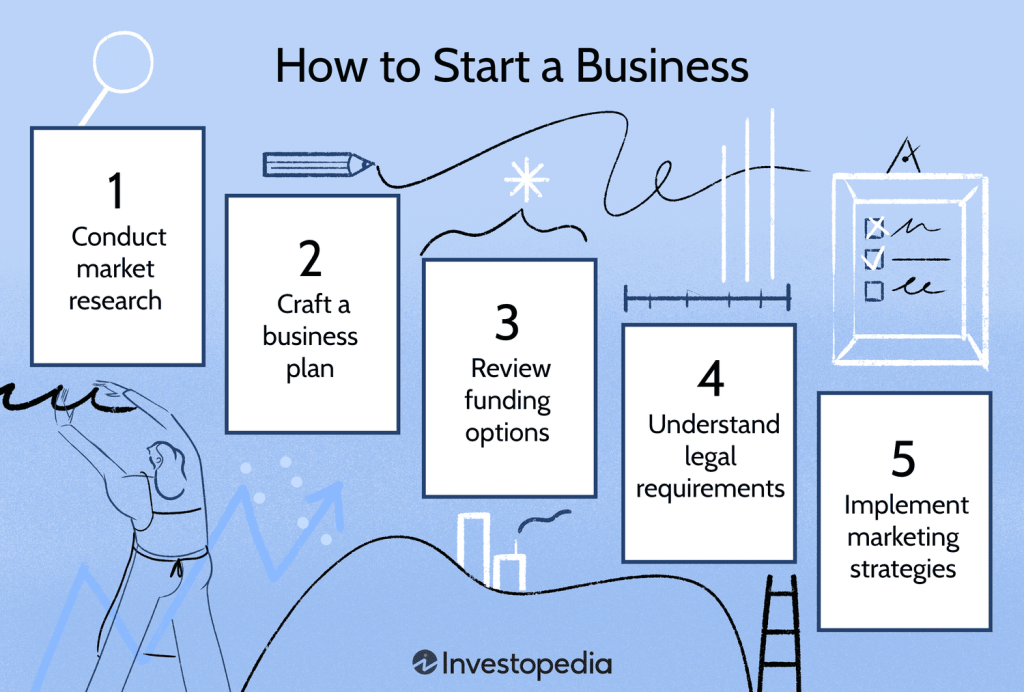
Starting a small business is both an exciting and challenging endeavor. While passion and vision drive entrepreneurship, success depends on careful preparation and strategic planning. Entrepreneurs must address operational, financial, marketing, and legal considerations before launching, ensuring a solid foundation that can sustain growth and withstand challenges. Thoughtful preparation reduces risks, streamlines processes, and positions a small business to compete effectively in an increasingly complex marketplace.
Clarify Your Business Idea and Goals
The first step in preparation is refining the business idea and defining clear objectives. Entrepreneurs should identify the unique value their product or service provides, understand the market need it fulfills, and articulate long-term goals. This includes determining target customers, pricing strategies, and potential revenue streams. A clearly defined mission and vision provide direction for decision-making and help align all subsequent planning efforts. Establishing measurable objectives also allows entrepreneurs to track progress, evaluate performance, and make informed adjustments as the business grows.
Develop a Comprehensive Business Plan
A well-structured business plan is essential for mapping out the operational and strategic path for a small business. This plan should detail the business model, market analysis, competitive landscape, marketing approach, operational processes, and financial projections. A strong business plan helps secure funding, attract partners, and clarify priorities for the founding team. Beyond serving as a roadmap, it is a dynamic tool that can evolve as the business tests assumptions, learns from market responses, and adapts strategies. Regularly revisiting and updating the plan ensures the business remains focused on its goals while staying agile in response to challenges and opportunities.
Prepare Financially and Secure Funding
Financial preparation is critical for launching a small business successfully. Entrepreneurs should estimate startup costs, plan for operating expenses, and project cash flow needs for the first months or years of operation. Funding can come from personal savings, loans, grants, or investors, but clarity about financial requirements and realistic projections is essential. Proper financial planning reduces the risk of early cash flow shortages and provides a framework for responsible spending. It also helps demonstrate credibility to lenders or investors, who seek assurance that the business can operate sustainably and achieve growth targets.
Set Up Operational and Legal Foundations
Operational and legal preparation ensures that the business runs smoothly and complies with regulations. This includes registering the business, obtaining necessary licenses or permits, selecting a business structure, and understanding tax obligations. Establishing operational processes, from supply chain management to customer service procedures, reduces inefficiencies and sets clear expectations for employees and partners. Legal and operational preparedness not only mitigates risk but also instills confidence among stakeholders, allowing the entrepreneur to focus on growth rather than compliance issues or preventable setbacks.
Build a Marketing and Online Presence
Marketing is crucial for attracting customers and establishing brand recognition from the outset. Entrepreneurs should create a comprehensive marketing plan that includes branding, target audience strategies, messaging, and outreach channels. Online presence is particularly important for visibility and credibility. Search engine optimization, social media engagement, and content marketing help reach potential customers efficiently. Leveraging services like a Link Building Service can enhance online visibility by acquiring high-quality backlinks, boosting search engine rankings, and increasing exposure to target audiences. While link building is just one component of a broader marketing strategy, it can play a significant role in ensuring the business is discoverable in a crowded digital landscape.
Plan for Staffing and Growth
Even small businesses benefit from clear staffing and growth strategies. Entrepreneurs should identify critical roles, skill requirements, and potential outsourcing opportunities. Hiring the right team members or leveraging freelancers can improve efficiency, enhance customer experience, and support scalability. Growth planning also involves anticipating challenges, setting performance benchmarks, and creating processes for continuous improvement. By preparing for growth from the start, small businesses can scale without compromising quality or operational stability.
Starting a small business requires careful attention to strategy, finance, operations, marketing, and staffing. Entrepreneurs who invest in thorough preparation—clarifying their vision, developing a detailed business plan, securing funding, establishing operational and legal frameworks, building marketing and online presence, and planning for growth—are far more likely to succeed. Leveraging tools such as a link building service can further enhance visibility and credibility online, providing a strong foundation for sustainable growth in a competitive market.
